
Cedars occur in three distinct geographical areas.

The Plantsman’s Choice: Cedars for future urban planting
The Plantsman’s Choice: Cedars for future urban planting
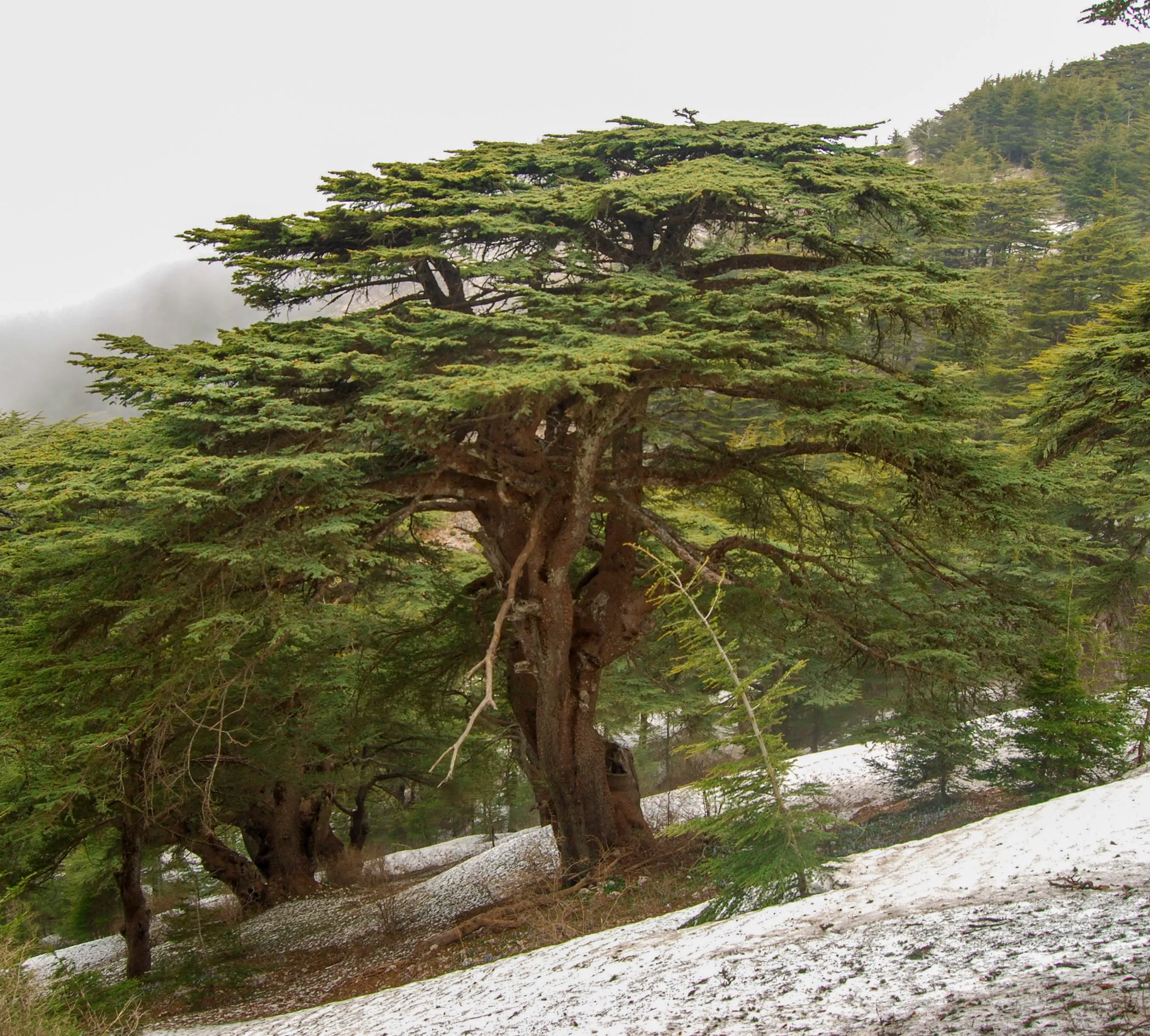
Cedars occur in three distinct geographical areas – northern and northwestern Africa, east of the Mediterranean, and northern Afghanistan across Pakistan to northwestern India and western Nepal. However, fossil finds indicate that the genus once had a much wider distribution, including large parts of Europe and Asia.
Cedars are typically characterised by their evergreen needles, which are arranged in dense spiral and whorled formations, similar to the needle formations of larches (Larix spp.). The cones are upright, similar to those of fir trees (Abies spp.), but they lack protruding scales.
Cedars generally require a warm climate with a long growing season, which makes them an interesting option for future urban climate conditions in Western Europe, where cedars already thrive in inner-city environments. However, it should be noted that young seedlings are significantly less hardy and are more susceptible to frost damage than older specimens.
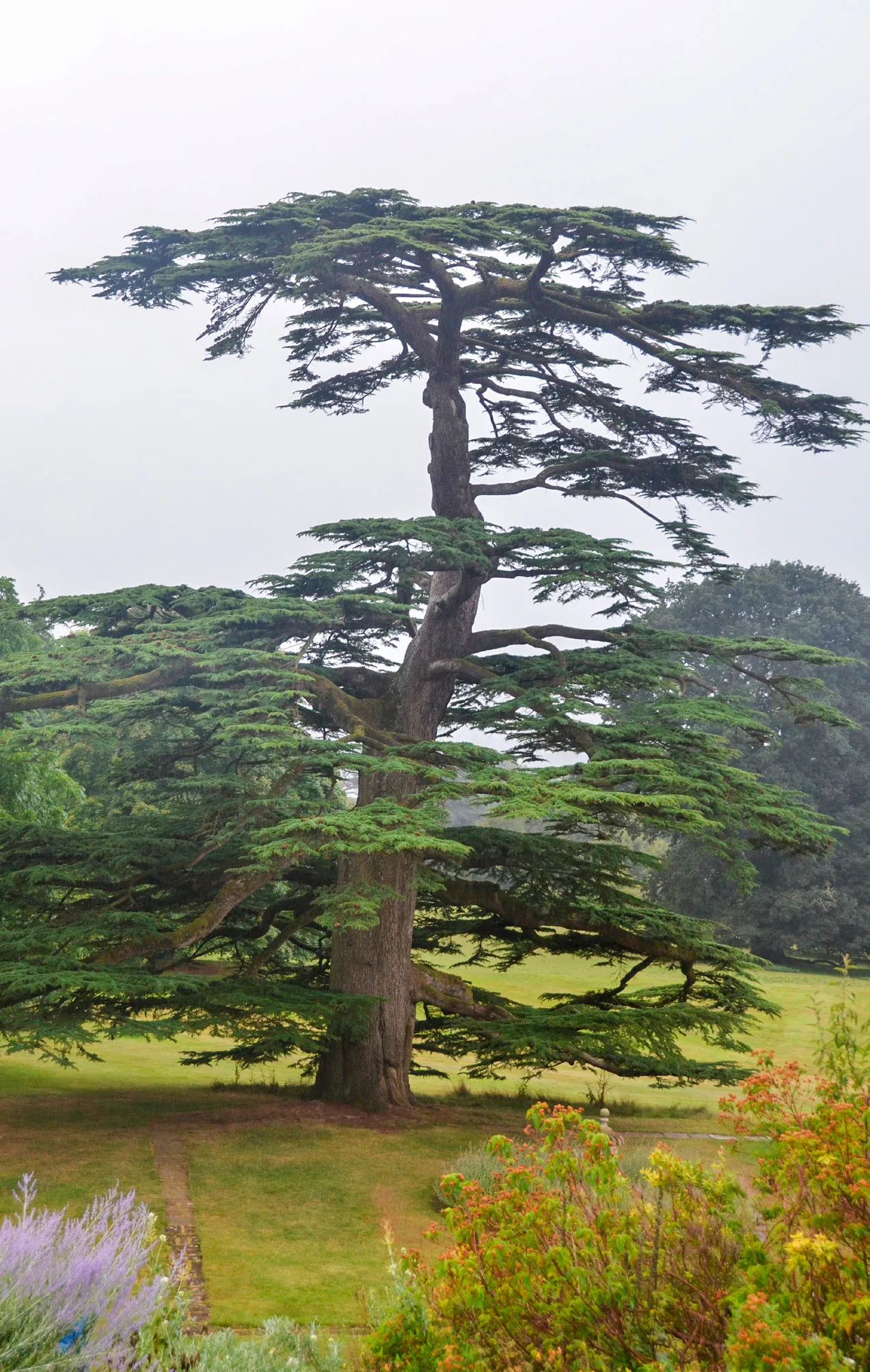
Cedar of Lebanon Cedrus libani
The cedar of Lebanon is considered the archetype of the genus, as it is primarily this species and its characteristic growth habit that most people refer to when they think of cedars. The species has a widespread distribution, from western and southwestern Turkey (as well as a small population in northeastern Turkey) to Lebanon and Syria. According to taxonomic experts, the species includes two varieties – C. libani var. libani and C. libani var. brevifolia. The latter was previously described as a separate species but is now considered to be a cedar of Lebanon; it only occurs in the Troodos Mountains in Cyprus.
Some literature also mentions a subspecies, C. libani subsp. stenocoma, which is described as a cross between the cedar of Lebanon and the Atlas cedar. This subspecies differs in that it has a more conical growth habit (even in older trees), more blue-green needles, and hairy shoots. The introduction and description of this subspecies originated from the search for a hardy genotype of the species for the northeastern United States. On behalf of the Arnold Arboretum in Boston, botanist Walter Siehe collected seeds from the cedar trees growing at the top of the Taurus Mountains in Turkey. These trees proved to be superior in hardiness in the northeastern United States compared to the material previously available. Later taxonomic compilations do not accept this subspecies as it is not considered to differ sufficiently from an average C. libani. Despite this, the trees originating from Siehe’s collections are interesting as they demonstrate significantly greater hardiness. However, it should be noted that these trees still require a long, warm summer to develop good winter hardiness.
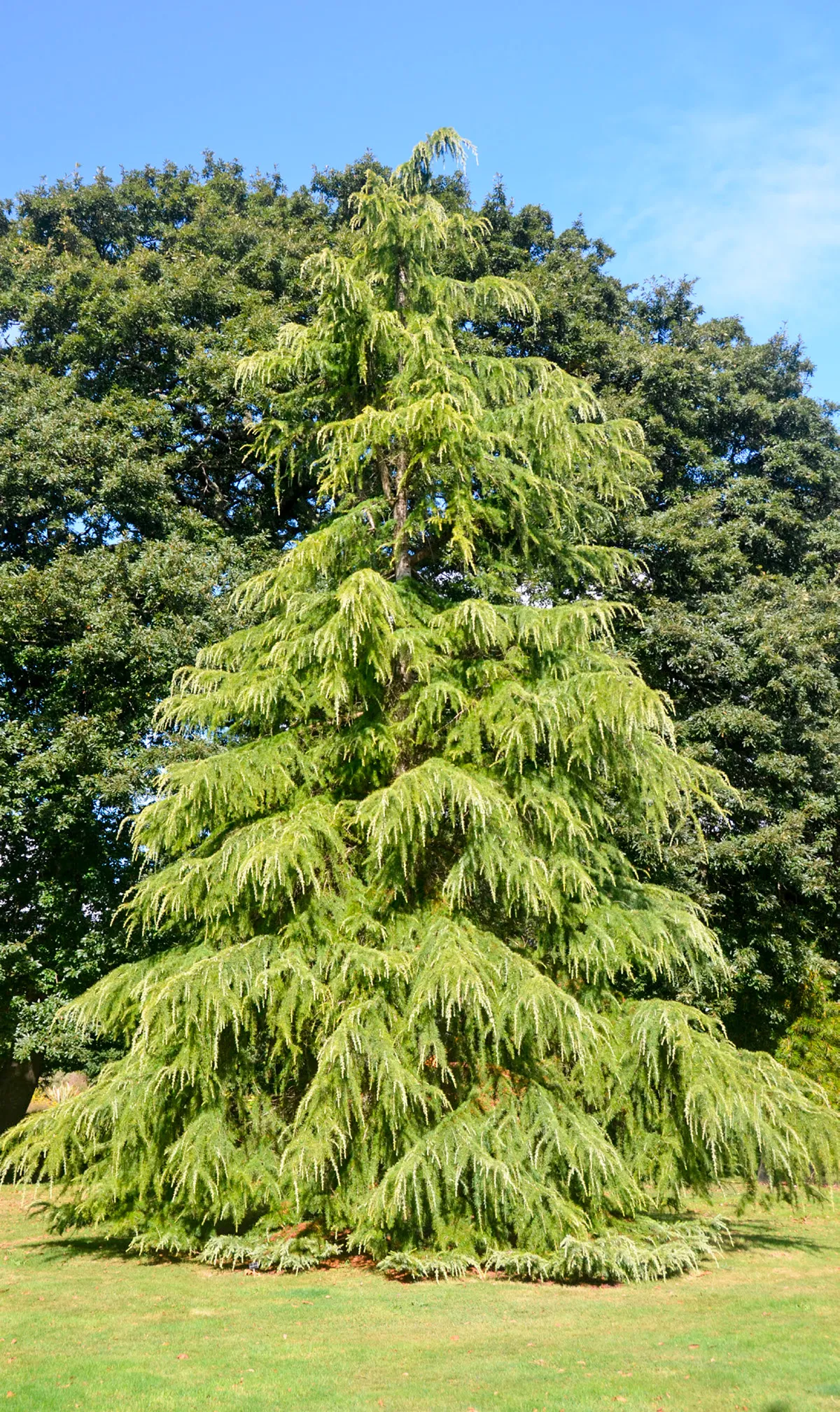
Himalayan or deodar cedar Cedrus deodara
Cedrus deodara grows wild in northern and northeastern Afghanistan and across northern Pakistan to northwestern India and western Nepal. There are also reports of it occurring in western China (Himalayas).
The species occurs in mountain environments at 1700–3400 m above sea level. Its eastern distribution is limited by the mild and humid climate that favours many other, more competitive species. In its natural growing environments, there are reports of trees that are 50–70 m tall, while in cultivation they usually reach 15–20 m (max. 25 m) in height.
The Himalayan cedar differs from other cedars in that the top shoot and the tips of the main branches are elegantly drooping. It has a very fine tendency to develop and maintain a straight trunk. It has a compact pyramidal growth habit when young and retains its overall shape as it ages, whilst becoming broader. Distinct branch layers also develop in older Himalayan cedar trees. Like other cedar species, it is heat-loving and requires a long, warm summer to develop good winter hardiness. Based on the habitats from which the species originates, it can be considered drought-tolerant as it grows in regions with very dry summers.
Both cedar of Lebanon and Himalayan cedar are capable of becoming large, statuesque trees that help to define a landscape’s character. They need space above and below ground to thrive.

Dr Henrik Sjöman is a Lecturer at the Swedish University of Agriculture Sciences and a Scientific Curator at Gothenburg Botanic Garden.
Dr Andrew Hirons is a Senior Lecturer in Arboriculture and Urban Forestry at University Centre Myerscough.

This article was taken from Issue 212 Spring 2026 of the ARB Magazine, which is available to view free to members by simply logging in to the website and viewing your profile area.