
The role of the arboriculturist is to help others to maximise the benefits of trees.

Assessing biodiversity value of trees
Assessing biodiversity value of trees
Emma Gilmartin, Senior Technical Officer
The role of the arboriculturist is to help others to maximise the benefits of trees. In order to do so, it is vital that we effectively assess those benefits.
The appraisal of ecological value should be integral to most arboricultural activity. However, sound methodologies are not readily available, and none are embedded in relevant arboricultural standards.
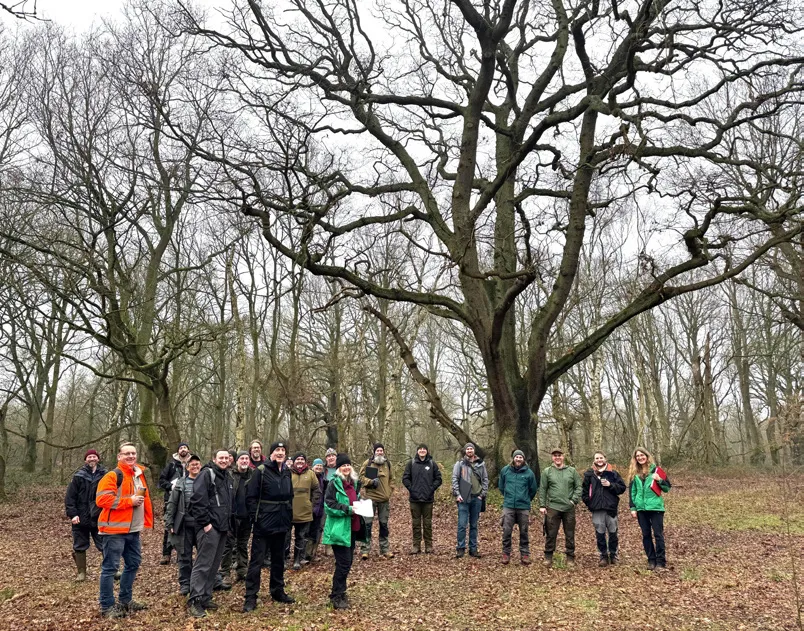
In February, we were pleased to host a Forest Research (FR) pilot study at Sherwood Forest which explored ways to assess a tree’s biodiversity value. VETcert-certified specialists, including myself, were joined by trees and woodland specialists from Natural England and FR government scientists. It was an opportunity to look closely at the biodiversity associated with trees and consider how arboriculturists might better capture and communicate this.
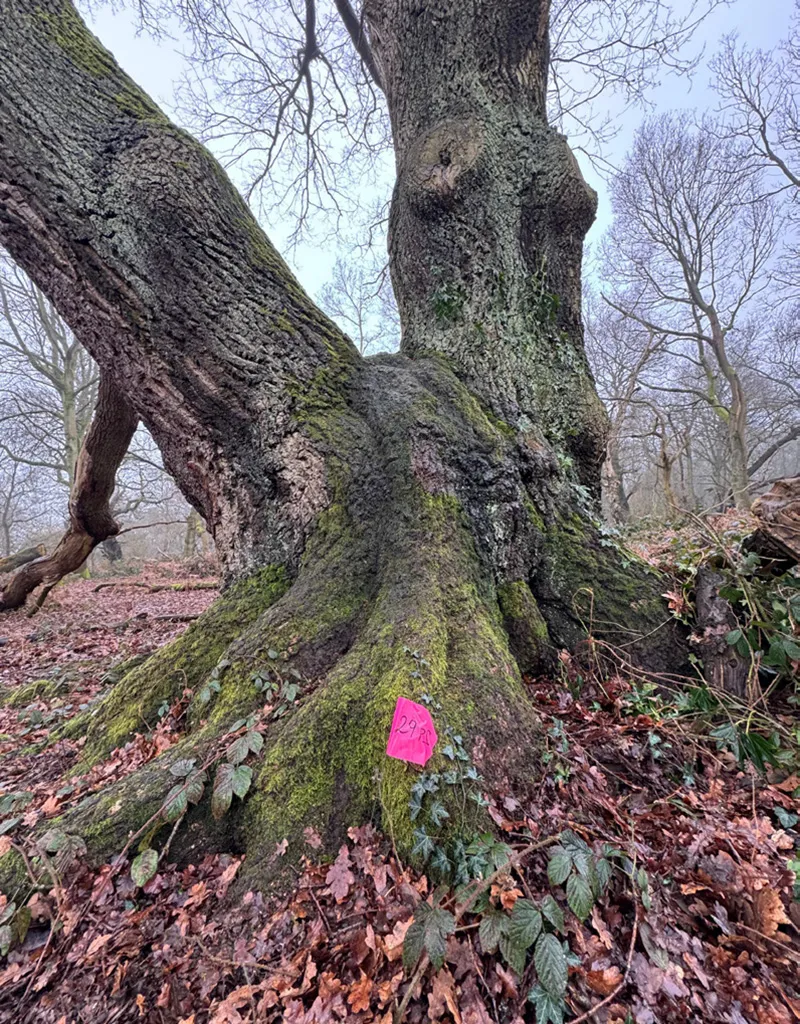
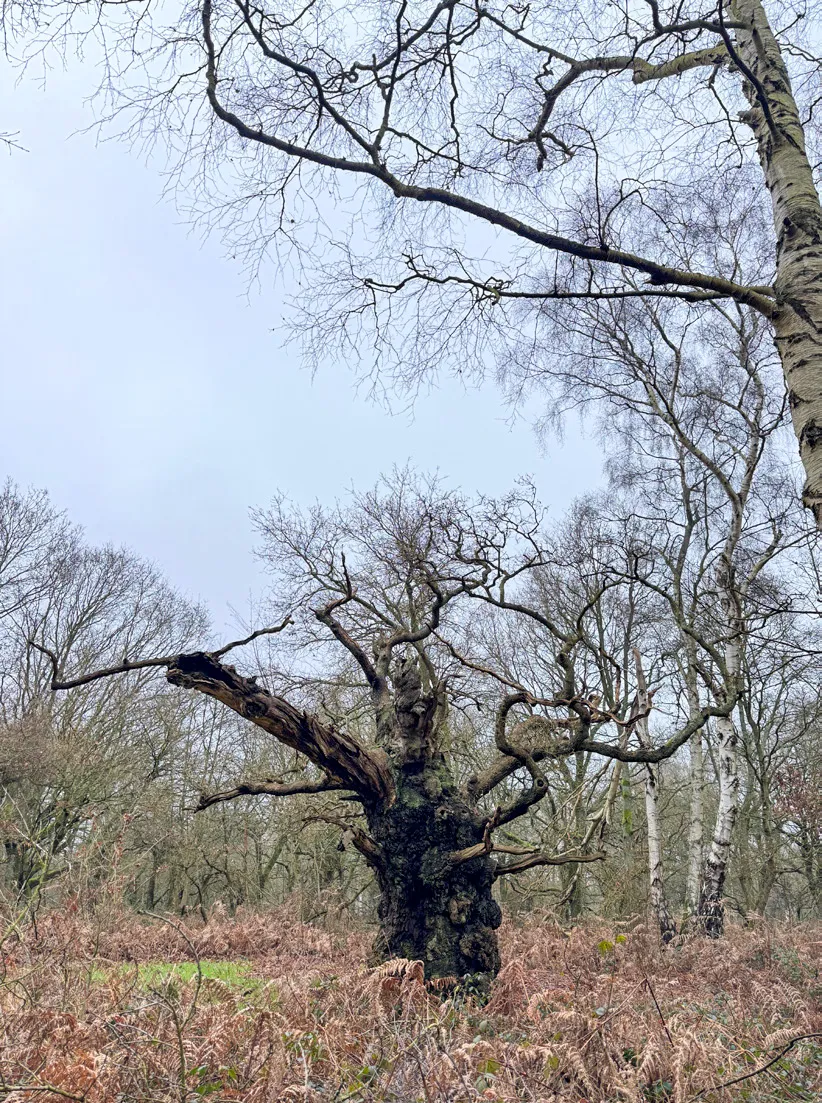
We ventured into the forest to assess groups of trees (just oaks, of varying age, size, condition) and assign a relative biodiversity value for each tree within these groups. This initially simple exercise was to measure agreement in rank of importance and draw out the thought processes of participants completing the assessments. After an indoor discussion about the first session, we returned to the trees in the afternoon, this time to complete a more structured survey, following the TreMs (tree-related microhabitats) typology.
By recording the presence of around 50 precisely defined and parametrised features, we hoped to observe consistency between the surveys completed by different participants, as it is well-known that without clear definitions there is large variability between observers in the detection and number of microhabitats found.
Overall, we spent the day sharing our ideas and experience and enjoyed some challenging discussions about how we evaluate trees. Most agreed there was utility in using TreMs or a similar, industry-supported method in our work.
I was encouraged by the collaboration between the Association, our members and our civil service colleagues, who are increasingly aware of the relevance of this work to arboriculture and particularly to the recognition and categorisation of veteran trees – which we find the industry still grappling with. As we’ve only just returned from the field, all the results are not yet it in, but we will share them when they’re published.
TreMs typology
The TreMs typology was first developed in Europe for temperate and mediterranean forests1, and has since been refined for the boreal context2. The system is hierarchical, meaning that recording of TreMs can be completed at different levels: forms (of which there are seven, below), groups (15+) and types (47+). The developed typology seeks to provide a shared language and a transparent system by which to assess and compare trees – and populations. There is a growing body of scientific literature that uses the TreMs typology to describe and understand forest development and management.
TreMs forms:
1 Larrieu, L. et al. (2018). Tree related microhabitats in temperate and Mediterranean European forests: A hierarchical typology for inventory standardization. Ecological Indicators 84: 194–207.
2. Bütler, R., et al. (2024). Field guide to Northern Tree-related microhabitats. Descriptions and size limits for their inventory in boreal and hemiboreal forests of Europe and North America. Birmensdorf: Swiss Federal Institute for Forest, Snow and Landscape Research WSL. [online] www.wsl.ch/en/publications/field-guide-to-northern-tree-related-microhabitats/
- Cavities
- Injuries and exposed wood
- Crown deadwood
- Excrescences
- Fungal fruiting bodies and slime molds
- Epiphytic, epixylic and parasitic structures
- Exudates

This article was taken from Issue 212 Spring 2026 of the ARB Magazine, which is available to view free to members by simply logging in to the website and viewing your profile area.